13 March, 2012

Ketil Bjornstad - The Sea (1995)

Ketil Bjornstad - The Sea (1995)
jazz | 1cd | eac-flac-cue-log-cover | 335MB
ECM
Allmusic:
This CD from pianist Ketil Bjornstad fits the ECM stereotype. The music is generally mournful, full of space, floating and very much a soundtrack for one's thoughts. The 12 parts of "The Sea," which find Bjornstad joined by cellist David Darling, guitarist Terje Rypdal and drummer Jon Christensen, set somber moods rather than introduce memorable themes and the only real excitement is supplied by Rypdal's rockish guitar. Some listeners may enjoy its introspective and peaceful nature of these performances but most will find this a bit of a bore.

Tracks
- "I" - 6:58
- "II" - 7:28
- "III" - 4:40
- "IV" - 8:49
- "V" - 6:39
- "VI" - 9:19
- "VII" - 5:15
- "VIII" - 2:39
- "IX" - 5:47
- "X" - 4:31
- "XI" - 7:26
- "XII" - 3:39
All compositions by Ketil Bjørnstad

Personnel
* Ketil Bjørnstad - piano
* Terje Rypdal - guitar
* David Darling - cello
* Jon Christensen - drums

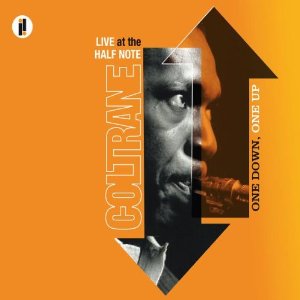
John Coltrane - One Down, One Up: Live At The Half Note (1965)

John Coltrane - One Down, One Up: Live At The Half Note (1965)
jazz | 2cd | eac-flac-cue-log-cover | 645MB
Impulse!
Allmusic:
2005 was a watershed year for unreleased music by John Coltrane. First there was the unbelievable Thelonious Monk with John Coltrane Live at Carnegie Hall. Now Impulse offers this double CD of radio broadcasts in One Down, One Up: Live at the Half Note. It was recorded in March and May of 1965 by DJ Alan Grant for radio broadcast; while recording for broadcast, many hosts would usually just drop in on a session and tape the band for under an hour and take no note of catching a performance from the beginning. That rule applies here. The first disc was recorded on March 26. Grant's introduction begins during Jimmy Garrison's solo. The band had already been playing the title cut for 35 minutes. Coltrane steps in a couple of minutes in and blows hard for nearly 28 minutes. Trane had already released A Love Supreme and was seeking to expand the harmonic reaches of his sound, exploring every avenue available to him. The band astonishes too. Here McCoy Tyner, Garrison, and Elvin Jones push the limit, swinging hard and fast (Jones' playing is especially outrageous). Tyner's big block chords play toward ascending Coltrane's scales, not trying to keep up but expanding the chromatic palette with a fury. He drops out around the ten-minute mark and it's Trane and Jones forcing each other into unknown corners before breaking out of them into new dimensions. Garrison's attack is not content to try to keep it grounded but provide enough of an anchor for the intervallic exploration to be limitless. Garrison drops out as well and it's a duet near the end of the track, Jones matching Coltrane measure for measure with a breathless intensity before Tyner and Garrison reenter to take it out with the modal head coming back in a completely different form. What's remarkable is that Trane avoided his sheets-of-sound approach entirely here. His solo is focused and the restraint is harmonic, but it results in a performance of expansive force and muscular taste. And it nearly is. Despite a few near washouts in the sound, Trane's capability to continue to build a solo is simply astonishing. After a minute of announcements, the band kicks into "Afro Blue." This cut, a mere 12 minutes, is a tour de force for the band (Tyner's solo in particular).
Disc two, from May 7, thankfully, begins at the beginning, so to speak. The band is introduced before they start paying "Songs of Praise," an abstract workout more dissonant than the earlier show. But here again, the band locks into Coltrane's solo from the jump. Here it's Tyner shining a light from the stand. His ascending and descending chords offer large foundations for Trane to lift off from. Jones' accents after nearly every phrase propel Garrison and Coltrane to step out and move their own scalar investigations to more complex territory. The final track, "My Favorite Things," is nearly 23 minutes here. Coltrane uniquely uses the tenor to introduce the tune before switching to the soprano. Tyner uses a skeletal frame on the theme and it goes off almost immediately with Coltrane soloing all around the melody. He returns often enough for the tune to keep its body, but his Eastern modal progressions go far afield. Tyner's solo is a flurry of assonance and dissonance with his right hand. Unfortunately, just as another mode asserts itself, Grant fades the band out, just as they hit the stratosphere. Unfortunate, yes, but it takes nothing away from the absolute necessity of this set for Coltrane fans. The sound is wonderful -- except in the dropout patches that last no more than a second or two. This is a release of historic importance and one that, now that it's off the bootleg market, will be talked about by jazz fans and Coltrane aficionados for the foreseeable future.

Tracks
Disc 1
-1. "Introduction and Announcements" – 1:36
-2. "One Down, One Up" – 27:39
-3. "Announcement" – 0:51
-4. "Afro-Blue" – 12:44
Disc 2
-1. "Introduction and Announcements" – 0:43
-2. "Song of Praise" – 19:38
-3. "Announcements" – 0:43
-4. "My Favorite Things" – 22:37

Personnel
* John Coltrane – tenor saxophone/soprano saxophone
* Jimmy Garrison – double bass
* Elvin Jones – drums
* McCoy Tyner – piano

08 March, 2012

Assif Tsahar - 'ein sof' (1997)

Assif Tsahar - 'ein sof' (1997)
jazz | 1cd | eac-flac-cue-log-cover | 465MB
Silkheart
Allmusic:
With William Parker and Susie Ibarra as his trio cohorts, Assif Tsahar is keeping major league company on this disc and Ein Sof shows he's up to the challenge. The tenor saxophonist is fond of jumping to Albert Ayler-like cries but he doesn't really develop solos out of those tonal wails like Ayler did. He's probably closer to Charles Gayle's stream of notes pouring forth overall but Tsahar is more measured and economical, allowing the pieces to trail off when the collective energy is exhausted and ideas drained. Ein Sof features half-a-dozen full pieces broken up by six short snippets of "Ephemeral Symbiosis." The latter segments range from hard-charging freedom pulse and ballads to ethereal pieces cued by Parker's bowed bass or Ibarra's percussive clatter, so it's hard to know if it's one continuous piece done cut-up style or short bits of distinct improvisations given the same title. Tsahar hits the ground running with "Is Here Tomorrow Will" while "Through Forgotton Ancestors" starts up more melodic and meditative, with a tart opening theme and freedom pulse feel with Ibarra focused on her percussive click repertoire. "Sun Drops" finds Tsahar blowing almost subliminal harmonics behind Parker's bowed strokes and Ibarra's bells and the more intense, Ayleresque title track returns to exploring the tonal similarity of broad tenor smears against Parker's bowed bottom. "Shadow Puppets" angularly probes a relatively spare rhythm pulse that ebbs and flows in intensity before bleeding into "Internal Dialogue" so smoothly you might mistake it for the same track until the latter's more robust, brawny character comes through. Tsahar goes for his Ayler shriek repertoire with Parker's potent bowed strum and the busy clatter of Ibarra's percussion and trademark light touch -- it always sounds like she's surrounding the center of the music more than establishing it. Ein Sof is a strong debut and one that should appeal to David S. Ware fans, although Tsahar's tone isn't as full and his lines tend to be shorter and more fragmented. But this music passes the fundamental test of collective improvisation -- it takes the listener on a voyage, unfolding organically though swirls and eddies, ebbing and flowing with the inspiration of the improvisers.

Tracks
-01. "Is Here Tomorrow Will" - Tsahar - 10:32
-02. "Ephemeral Symbiosis (Pt. 3)" - Tsahar - 1:59
-03. "Ephemeral Symbiosis (Pt. 2)" - Tsahar - 1:34
-04. "Through Forgotton Ancestors" - Tsahar - 12:31
-05. "Sun Drops" - Tsahar - 7:56
-06. "Ein Sof" - Tsahar - 7:12
-07. "Ephemeral Symbiosis (Pt. 5)" - Tsahar - 2:37
-08. "Ephemeral Symbiosis (Pt. 1)" - Tsahar - 1:34
-09. "Shadow Puppets" - Tsahar - 10:36
-10. "Internal Dialogue" - Tsahar - 11:38
-11. "Ephemeral Symbiosis (Pt. 4)" - Tsahar - 1:53
-12. "Ephemeral Symbiosis, Pt. 6" - Tsahar - 1:43

Personnel
* Assif Tsahar - tenor sax
* William Parker - bass
* Susie Ibarra - druns

Coleman Hawkins - Sirius (1966)

Coleman Hawkins - Sirius (1966)
jazz | 1cd | eac-flac-cue-log-cover | 235MB
OJC
Allmusic:
Hawkins's final studio session is rather sad. Due to an excess of drink and his unwillingness to eat, the great tenor-saxophonist went steadily downhill between 1965 and his death four years later. Recorded in late 1966, this quartet set finds Hawk constantly short of breath and unable to play long phrases. He is able to get away with this deficiency on the faster pieces but the ballads are rather painful to hear. Even at this late stage Hawkins still had his majestic tone but this recording is only of historical interest.

Tracks
-1. "The Man I Love" - Gershwin, Gershwin - 5:09
-2. "Don't Blame Me" - Fields, McHugh - 4:38
-3. "Just a Gigolo" - Brammer, Caesar, Casucci - 2:56
-4. "The One I Love (Belongs to Somebody Else)" - Jones, Kahn - 3:53
-5. "Time on My Hands" - Adamson, Gordon, Youmans - 4:03
-6. "Sweet and Lovely" - Arnheim, LeMare, Tobias - 4:24
-7. "Exactly Like You" - Fields, McHugh - 6:52
-8. "Street of Dreams" - Lewis, Young - 4:12
-9. "Sugar" - Alexander, Mitchell, Pinkard - 5:13

Personnel
* Coleman Hawkins - tenor sax
* Barry Harris - piano
* Bob Cranshaw - bass
* Eddie Locke - drums

Hampton Hawes - At The Piano (1976)

Hampton Hawes - At The Piano (1976)
jazz | 1cd | eac-flac-cue-log-cover | 215MB
OJC
Allmusic:
Hampton Hawes' final recording found him returning not only to the acoustic piano after having dabbled in electric keyboards from 1972-74, but to producer Lester Koenig and his Contemporary label, where Hawes recorded most of his classic gems of the 1950s. Teamed up with bassist Ray Brown and drummer Shelly Manne, Hawes shows that he was still in prime form. The trio plays two of Hawes' originals, some current and worthwhile pop tunes ("Killing Me Softly With His Song" and "Sunny"), and "Blue In Green" and "When I Grow Too Old to Dream." The CD, also has in its liner notes a very interesting conversation between Hawes and Koenig from January 20, 1977; both would pass away before the year ended.

Tracks
-1. "Killing Me Softly With His Song - Fox, Gimbel" - 6:04
-2. "Soul Sign Eight" - Hawes - 8:11
-3. "Sunny" - Hebb, Kern - 5:00
-4. "Morning" - Hawes - 7:28
-5. "Blue and Green" - Davis, Evans - 5:25
-6. "When I Grow Too Old to Dream" - Hammerstein, Romberg - 6:42

Personnel
* Hampton Hawes - piano
* Ray Brown - bass
* Shelly Manne - drums

05 March, 2012

Gabor Szabo - The Sorcerer (1967)

Gabor Szabo - The Sorcerer (1967)
jazz | 1cd | eac-flac-cue-log-cover | 405MB
Impulse! | 20bit SBM
Allmusic:
Gabor Szabo's quintet featuring Jimmy Stewart was one of the guitarist's very best units. Live performances like this, recorded at Boston's Jazz Workshop, document some of the excitement the group stirred in 1967-1968. Included in the 1997 CD reissue are three excellent tracks ("Los Matadoros," "People," and "Corcovado") recorded at the same concert, which originally appeared on More Sorcery. The playing seems inspired, and the interplay within the group is something to behold -- even when performing lightweight tunes like "The Beat Goes On."

Tracks
-01. "The Beat Goes On" (Sonny Bono) - 4:52
-02. "Little Boat (O Barquinho)" (Ronaldo Bôscoli, Roberto Menescal) - 4:23
-03. "Lou-Ise" (Jimmy Stewart) - 4:17
-04. "What Is This Thing Called Love?" (Cole Porter) - 5:18
-05. "Space" - 6:40
-06. "Stronger Than Us" (Francis Lai, Pierre Barough) - 4:13
-07. "Mizrab" - 6:58
-08. "Comin' Back" (Clyde Otis, Szabó) 1:56
-09. "Los Matadoros" - 12:09 Bonus track on CD reissue
-10. "People" (Bob Merrill, Jule Styne) - 5:18 Bonus track on CD reissue
-11. "Corcovado" (Antonio Carlos Jobim) - 3:22 Bonus track on CD reissue
All compositions by Gábor Szabó except as indicated
Recorded at The Jazz Workshop in Boston, Massachusetts on April 14 & 15, 1967


Personnel
* Gábor Szabó - guitar
* Jimmy Stewart - guitar
* Lajos "Louis" Kabok - bass
* Marty Morell – drums
* Hal Gordon - percussion

Material - Seven Souls (1989)

Material - Seven Souls (1989)
rock | 1cd | eac-flac-cue-log-cover | 430MB
Triloka 1997
Allmusic:
This release of Seven Souls should not be confused with the original issue, which came out on the Virgin label in 1989 and is now out of print. The Triloka reissue improves on the original by adding four remixed versions to the regular album tracks (placing them, strangely, at the head of the program instead of at the end) and by printing the William Burroughs' texts which function as the album's focal point. Those texts are fascinating and disturbing: on the title track, Burroughs explains ancient Egyptian beliefs about the gradual process of death, while Sly Dunbar delivers a modified dancehall beat underneath. On "Soul Killer," he speculates on whether the soul can survive nuclear assault, while the band attempts, apparently, to simulate nuclear devastation musically (the result is much more musically interesting in its remixed version). "The Western Lands" is the album's masterpiece, a travel guide for the soul with an eerily funky accompaniment of melodic eight-string bass and one-drop drumming. The remix is even better. In its original version, this was only a pretty good Material album; in this reissue, it's among the band's best.

Tracks
-01 "The Western Lands" [a Dangerous Road Mix] (Laswell, Burroughs) – 8:31
-02 "Seven Souls" [Tim Simenon Mix] (Tim Simenon, Burroughs) – 7:06
-03 "Soul Killer" [Remote Control Mix by Terre Thaemlitz] (T Thaemlitz, Burroughs) – 8:15
-04 "Ineffect" (Bill Laswell, Nicky Skopelitis, William S. Burroughs, Simon Shaheen) – 7:34
-05 "Seven Souls" (Laswell, Burroughs) – 5:42
-06 "Soul Killer" (Laswell, Burroughs) – 4:32
-07 "The Western Lands" (Laswell, Skopelitis, Burroughs) – 6:54
-08 "Deliver" (Laswell, Skopelitis, Foday Musa Suso) – 5:48
-09 "Equation" (Laswell, Skopelitis, Rammellzee) – 5:06
-10 "The End of Words" (Laswell, Burroughs) – 5:06

Personnel
* William S. Burroughs – voice
* Rammellzee – voice ("Equation")
* Foday Musa Suso – voice ("Deliver")
* Fahiem Dandan – voice ("Ineffect")
* Nicky Skopelitis – 6 and 12 string guitars, baglama, coral sitar, saz, Fairlight
* Simon Shaheen – violin
* L. Shankar – violin
* Bill Laswell – 4, 6 and 8-string basses, acoustic guitar, tapes, percussion
* Jeff Bova – electronic keyboards
* Sly Dunbar – drums, Fairlight
* Aïyb Dieng – percussion.
"The Western Lands" [a Dangerous Road Mix]
* Jah Wobble – bass
* Bill Laswell – bass samples
* Nicky Skopelitis – guitar
* Tetsu Inoue – electronics
* DJ Spooky – noise
"The Seven Souls" [The Secret Name]
* Alicia Renee aka Blue Eyes: vocals
* Nicky Skopelitis: guitar
* Bill Laswell: bass, keyboards, turntable

Visitors

Website counter